Four Tips for Soundproofing Rental Units

If you manage or own a multi-family dwelling, you can count on noise being a top complaint from your tenants. It’s not easy living so close to one another – especially with paper thin walls and Soundproofing rental unitsneighbors with differing schedules.

Soundproofing rental units can make a world of difference for tenants who will be more comfortable, happier, and stay longer!

There are, however, a few steps you can take to help your tenants hear less from their neighboring units.

1. Think about the floors.

Sure, carpet is quieter than tile or hardwood – but how appealing is a FULLY carpeted apartment? In 2013… not very. An acoustical underlayment that has an IIC rating, meaning it absorbs impact noise before it can travel through the floor to the ceiling below, will greatly reduce or eliminate the sound of footsteps that tenants can hear from their upstairs neighbors. If you find an underlayment with an both an IIC and an STC rating, this means it will not only reduce footfall noise transmission, but block some airborne noise like speech, music, and televisions as well.

audioseal_room2. Think about the walls.

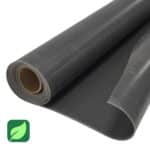
Just like floors, airborne noise can also make its way through the walls separating units. The most effective soundproofing techniques for walls include Mass Loaded Vinyl, which is installed during construction or when the wall is open, and attached to the studs – or creating a ‘floating wall’ or ‘room within a room’ by installing resilient isolation clips and a new layer of drywall, mechanically isolated from the previous layer. You can even do both for superior results.

*Pro tip: if your walls are already finished and closed up, you can also use a damping compound like Green Glue and an additional layer of drywall.

3. Think about the doors.

Remember the 1% Rule: A 1% opening will allow up to 50% of sound to pass through a wall, door, barrier, etc. So more often than not, if tenants are hearing their neighbors, it may be coming through gaps around openings like doors and windows. Using a well-fitting, solid core door is always a good start, but if more sound attenuation is needed, an Acoustical Door Seal Kit can be attached around the existing door to make it airtight – and soundproof.

4. Think about the cost.

While you may have foreseen the necessity and benefit of soundproofing rental units, not everyone will want to, or need to, invest in all of the above soundproofing techniques. Think about what noise issues specifically your tenants are bringing to your attention, and how that noise is being transmitted between units. Addressing only the true problem areas will save you a lot of time and cash.

Need help identifying the source of your noise transmission? Give us a call for a free acoustical consultation. One of our knowledgeable Architectural Sales Reps would love to talk you through your noise issue and any possible solutions: 800 782 5742


How to Reduce Indoor Swimming Pool Noise

Summer is almost here, and everyone you know is anxious to head for the nearest body of water. Many of you avid swimmers have probably already been practicing your butterfly and breast strokes… at your local indoor pool.

Besides the lack of sunshine, one drawback to using an indoor pool is the noise level. In months where the indoor pool is the place to be – crowded with classes and vocal children – it can be nearly impossible to hear someone speaking to you from three feet away, or to understand announcements from lifeguards and pool staff over the reverberation of sounds.

The reason sound is so intense, and speech intelligibility so poor, is because rooms containing indoor pools are almost always all hard surfaces. The water, walls, floor and ceiling are likely tile or block, which are the most impervious to water damage, but also give sound waves no place to dissipate.

The key to solving these noise issues is adding sound absorbing materials to the walls and ceilings to offset all of the reverberant surfaces. There are a number of acoustical treatments you can use to reduce indoor swimming pool noise, and the ones listed below are also tolerant to moisture and can be installed to block walls and ceiling scaffolding.


Acoustical Baffles and Clouds

These ceiling treatments are made of sound absorbent foam with an HPC waterproof coating and are easily suspended from scaffolding – absorbing sound waves that tend to build up in high ceilings.


Sonex™ Foam Baffles

Sonex Foam Baffles               Sonex Foam Baffle

Sonex Foam Baffles


Whisperwave™ Baffles and Clouds

Whisperwave Clouds  Whisperwave Clouds

Picture8


Rondo Acoustical Baffles

Rondo Acoustical Baffles

Rondo Acoustical Baffles              Rondo Acoustical Baffles


AlphaEnviro™ PVC Baffles

hires


Acoustical Banners

Banners are PVC or Ripstop wrapped acoustical products that offer the most sound absorbent surface area, and are easily cleanable.


AlphaFlex™ PVC Banners

alphaflex acoustical banners


Acoustical Wall Panels and Ceiling Tiles

Waterproof PVC encapsulated acoustical treatment as well as acoustical foam can also be installed surface mounted on walls or ceilings.


Sonex™ Wall and Ceiling Tiles

Sonex foam panels  Sonex Foam Panels


Phonstop Recycled Glass Wall and Ceiling Panels

Phonstop Acoustical Panels


AlphaEnviro PVC Wall Panels

alphaenviro acoustical panels

Feel free to call in with any questions on these products or applications, or for a free acoustical consultation for your indoor pool!
800 782 5742

info@acousticalsolutions.com

AcousticalSolutions.com


Featured Case Study

Acoustical Wall Panels and Ceiling Clouds for The Spirit of the Mountain Band at Liberty University

The Liberty University Band was upgrading and moving to a new rehearsal room when they called Acoustical Solutions.

Together, the two came up with a plan to install acoustic panels and hanging acoustic ceiling tiles to compliment the sound diffusion that had already been planned.

In the end, the noise control solutions that were put into place greatly improved the band room acoustics in the new facility. Read More


Reducing Noise in Restaurants: Casa Del Barco and The Boathouse

“Many of the most cutting-edge, design conscious restaurants are introducing a new level of noise to today’s already voluble restaurant scene. The new noisemakers: Restaurants housed in cavernous spaces with wood floors, linen-free tables, high ceilings and lots of windows—all of which cause sound to ricochet around what are essentially hard-surfaced echo chambers” – The Wall Street Journal (Pass the Salt… and the Megaphone)

Due to the design preferences of millenials, eateries are sleeker, and louder, than ever. Acoustical Solutions recently helped restaurant owner Kevin Healy with reducing noise in his restaurants – without compromising their stunning, modern designs.

After fully renovating the lower level of an 1890s brick building for the opening of his second eatery, Healy wanted to avoid the heartache of customer noise complaints he had experienced at his first business.

Kevin Healy’s first restaurant, The Boathouse at Rocketts Landing, is a popular destination for events like wedding receptions and parties. With a luxurious windowed dining room overlooking the James River, The Boathouse has operated for over five years, with only one recurring complaint among new patrons – the noise level.

After trying a few acoustical treatments from another company with less than desirable results, Healy worked with Acoustical Solutions and his designer Helen Reed to develop a treatment that would effectively reduce noise in his restaurant without adding more distracting acoustical treatments.

Around the same time, Healy was renovating another building in preparation of his new restaurant, Casa Del Barco.

“There are no soft surfaces in this entire restaurant,” said Reed, “Kevin knew from the beginning, based on what happened at the Boathouse, that Casa Del Barco would need acoustical treatment”.


Treatment Provided

The Boathouse at Rocketts Landing already had metal waves with acoustical batting behind, “But the results were not what we hoped”, said Reed, and noise complaints continued.

Acoustical Solutions developed a plan for an absorbent stretch wall and installed the treatment above the bar and open kitchen.

IMG_0765

As for Casa Del Barco, the treatments available were more plentiful since they could be conceived at the design process instead of being retrofitted into an existing design.

“I didn’t even know we could print on acoustical panels until I spoke with [Acoustical Solutions],” said Reed, “I think the panels in Casa Del Barco look great”.

For Casa Del Barco, Acoustical Solutions created large AcoustiArt Acoustical Panels printed with a mix of the restaurant’s color scheme and logo, for a branded acoustical ceiling treatment. AcoustiArt Panels are especially well suited for reducing noise in restaurants because they serve dual purposes as artwork and as acoustical wall or ceiling treatments.

IMG_0707


Quantitive Results

Since the installations of acoustical treatment, noise complaints have ceased at The Boathouse, and noise issues were completely avoided at Casa Del Barco.

“We haven’t had received any complaints about noise issues at Casa Del Barco,” said Healy, “it worked!”

Featured Products used in this Application

For more information on this project, or to receive a free acoustic consultation for your facility, contact Acoustical Solutions at 800 782 5742 or info@acousticalsolutions.com

dave

David Ingersoll

804 346 8350

di@acousticalsolutions.com


How to Soundproof: Acoustic Foam Does Not Block Sound

This title says it all, basically.  I say this about 5 times a day to prospective customers wanting to know how to soundproof and the question invariably that comes back is, “Why not? Then what thecolortec_voice_booth heck is it used for?”

It’s not that I’m trying to ruin anyone’s day here – I would love to have foam that could stop sound from going through walls. I would sell a ton of it.  But physics is physics and the fact is that we at Acoustical Solutions are not going to sell anything to someone that has zero chance of meeting a customer’s expectations.

Now, a lot of Audiophiles and people very familiar with the nuances of sound will say: “Well if you have a relatively small confined space with a given large sound source the waves will build up and potentially amplify certain frequencies due to modal responses of the shape of container – and therefore adding absorption to the inside of said confined space will indeed reduce overall dB from escaping into the environment,” but that’s not the point, I say.

The point I’m trying to make is that putting a few squares of 2” thick foam here and there on a partition wall in an apartment will not keep someone from hearing the other guy’s TV and sub woofer at 3 AM.  Even covering the wall 100% with 2” thick foam is not going to, to the extent of the person’s expectations, stop that sound from traveling right through the wall. Using acoustical foam is not how to soundproof.

For instance, some speakers used to use foam as the speaker grille cover years ago.  If foam is that great at blocking sound, then why do that?  Or the old earphones on Walkman’s from back in the day (I’m showing my age here) – they had foam right over the head phone to make it more comfortable for the listener.  The foam in both of those examples was not blocking the sound in any way. The sound just poured right through.
Here’s the deal: absorption and blocking are two totally different things.  I explain things better with analogies, if you have read any of my previous blogs you will be used to this by now.

The color white “reflects” all light, right?  And the color Black “absorbs” all light.  What we perceive as white is simply just all colors of light mixed together, and what we perceive as black is the absence of all color.  Shine a flashlight at a bright piece of tissue paper and you will register a great deal of reflectivity.  Shine the flashlight at a dark black colored piece of tissue paper and you will register very little reflectivity.

However, being that it’s tissue paper, you put either the white or black paper up against the light and use a rubber band to totally cover the end of the flashlight with it, and you will register nearly the same amount of luminosity traveling through both colors of tissue paper.  Maybe a tiny little less with the black…it’s not a perfect analogy. Splitting hairs aside though, the point is that sound does the same thing:  It reflects off certain surfaces and it’s absorbed by other surfaces, in much the same way white reflects light and black absorbs light.
When you look at recording studios that have all this fancy foam all over the place, don’t make the assumption that it’s the foam that is blocking sound from going through the wall.  It’s not. They have added layers of mass and caulk and isolation to that wall first to block the sound from traveling through, then added the foam to reduce echoes in the room for various reasons.IMG_6471

One of the main reasons foam, or any acoustically absorbent material (baffles, banners, fabric wrapped wall panels, etc.), are used, is to reduce the average reverberation time in a room.  A good example of a space that will benefit from adding acoustical absorption is a large gymnasium.  Here is an excerpt from a recent email exchange I had with a customer:
ME: “Sound goes out from its source and goes until it has simply gone through enough air that it loses energy and falls below the background noise level or below the threshold for our hearing.  If there happens to be a wall, floor, or ceiling in its way before it has gone through that certain amount of air, the sound will bounce right off and head in a different direction still looking for enough air to go through before it dissipates.  The louder the sound, the more air (distance) it has to go through to dissipate.  PA systems are a great deal louder than a person’s voice.  If the sound hits a surface that is very hard and immobile, it will bounce the sound energy at nearly 100% efficiency, which means the sound from a persons voice over a PA system is literally bouncing around the room for about 5 seconds or so.  That five seconds is the Reverb Time, or RT 60, of that room. People speak in a quick succession of vowels and consonants, so if the listener is hearing 5 or 10 vowel sounds still hanging in the air with 5 or 10 consonant sounds….all you hear is garble.  Baffles work because they are not A room with acoustic baffles100% efficient at reflecting the sound – in fact they are nearly 100% efficient at NOT reflecting the sound.  They are absorbing the sound reflections and therefore reducing the overall average Reverb Time. ”

CLIENT: “So Matt, how do I actually go about blocking sound through a wall or ceiling or anything else?”  That, unfortunately is a much bigger discussion.  It takes mass, or weight, and layers of it that are mechanically disengaged from one another, and sealed up tight 100% with caulk and putties, and…etc.  I actually have a previous blog entry that I wrote on the subject.

As always, I welcome any comments or questions, feel free to contact me using the information below.  Thanks and Happy Acoustical-ing!

-Matt Boughan

mdb@acousticalsolutions.com

800 782 5742 ext. 11


Cleaning Acoustic Panels: Spring Cleaning for Soundproofing

With the arrival of Spring, many people are focusing on the nice weather and rejoicing that they can finally open their windows and clean their offices and homes after being holed up by the cold.
While you are doing your spring cleaning, however, you may wonder how in the world you are supposed to clean your acoustical wall panels. They are dusty, have pen marks, and it’s not like you can throw them in a washing machine – here is how you should go about cleaning acoustic panels:

If your acoustic wall panels are fabric wrapped, they probably use Guilford of Maine acoustical fabric, or something very similar.24x48-Broadband-ds2

Guilford of Maine’s 100% recycled polyester panel fabrics are colorfast to both water-based and solvent-based cleaning solutions and may be cleaned with all conventional upholstery cleaning systems. Follow these guidelines when you’re cleaning fabric-wrapped acoustic panels:

  1. Vacuum the fabric periodically to remove accumulated dirt and dust. The frequency of this and any other routine maintenance is determined by end use conditions.
  2. Blot fresh spills immediately.
  3. Ensure that the fabric is adequately rinsed after cleaning, as residual cleaning agents may accelerate soiling.
  4. Have the fabric professionally cleaned whenever large stains or an overall soiled condition occurs.

For most water-based stains, a clean, absorbent cloth dampened with a detergent solution (e.g. 1 teaspoon laundry detergent/1 pint warm water) should be applied to the stain. Blot the fabric with the treated cloth, working from the outer edge of the stained area, moving inward. In order to effectively draw out the stain, renew the cleaning cloth frequently. Rinse well with clear water, and dry the fabric as quickly as practical. Oil-based stains may be treated in a similar manner, substituting a volatile solvent-based cleaner for the detergent solution. Always follow the manufacturer’s recommendations for using such products, and always pretest an inconspicuous area of the fabric for colorfastness to the cleaning agent.

When cleaning acoustic panels that are PVC, Ripstop, or Vinyl encapsulated, follow the below guidelines:


Alphaenviro_1PVC Encapsulated

PVC may be cleaned with a low concentration of a mild soap in water. The solution should be applied with a sponge or soft cloth with a gentle rubbing action. Cleaners with abrasives such as scouring powders or steel wool should be avoided. Also, cleaners that contain keytones, kerosene, or petroleum products must not be used.

If a PVC encapsulated product should become ripped or torn, it can easily be repaired with a matching PVC repair tape. If PVC tape is not available, then a clear packaging tape will work very well. As with all tapes, it is extremely important that the surface be clean and dry. When applying the tape, a sufficient amount of pressure must be used to ensure proper adhesion.

Vinyl
General Conditions: Day-to-Day Soil Ordinary dirt and smudges can be removed with a mild soap, warm water, and, if necessary, a hard bristle brush to remove dirt from the crevices of deeply textured patterns. Clean from bottom of wall upward. Rinse thoroughly with clean water from the top down using a sponge.

Deeply embossed wallcoverings need extra attention in case suds or loosened dirt lodge in depressed surfaces. Dry wallcovering with a soft, lint-free cloth or towel. For more difficult stains that are only surface deep, the use of a stronger detergent is recommended.

Not recommended for cleaning are steel wool or powdered abrasive cleaners because they mar the surface leaving an unsightly appearance.

Unlike wallcovering with conventional finishes, active solvent type cleaning preparations such as nail polish remover, tar and bug removers, etc., can be used with Pre-Fixx protected wallcoverings to remove residual stains that remain after cleaning with standard cleaning agents.

Special Conditions
Stains on Pre-Fixx protected vinyl wallcoverings can be cleaned by the following methods (Staining agents have been grouped to allow quick reference for cleaning instructions):

Cleaning Agents to Use:

1. Full Strength household cleaners (non-abrasive type) to be used with water and scrub brush

  • 409 All Purpose Cleaner
  • Fantastic
  • Butchers Sun Bath Cleaners
  • Service Master’s Wallglide Plus
  • Other type household cleaners and bleaches

2. Solvent type cleaner to be used with scrub brush and cloth. For most effective cleaning, use 100% full strength with brush. Dry area with cloth.

  • Rubbing Alcohol (IPA type)
  • Service Master’s Disaster Clean
  • Mineral Spirits
  • Kerosene
  • Naptha (lighter fluid)
  • Turpentine (paint thinner)

3. Strong active solvent cleaners such as nail polish remover (acetone/water) with scrub brush and cloth

If you are still unsure of what kind of acoustical panel you have, or have additional questions about the care and cleaning of your acoustical treatment, call in at 800 782 5742 or leave a comment below!


Switch to our mobile site